The Möbius Trap: A Test, Not a Verdict
A practical way to notice when an explanation loops back to protect itself—and what to check next.
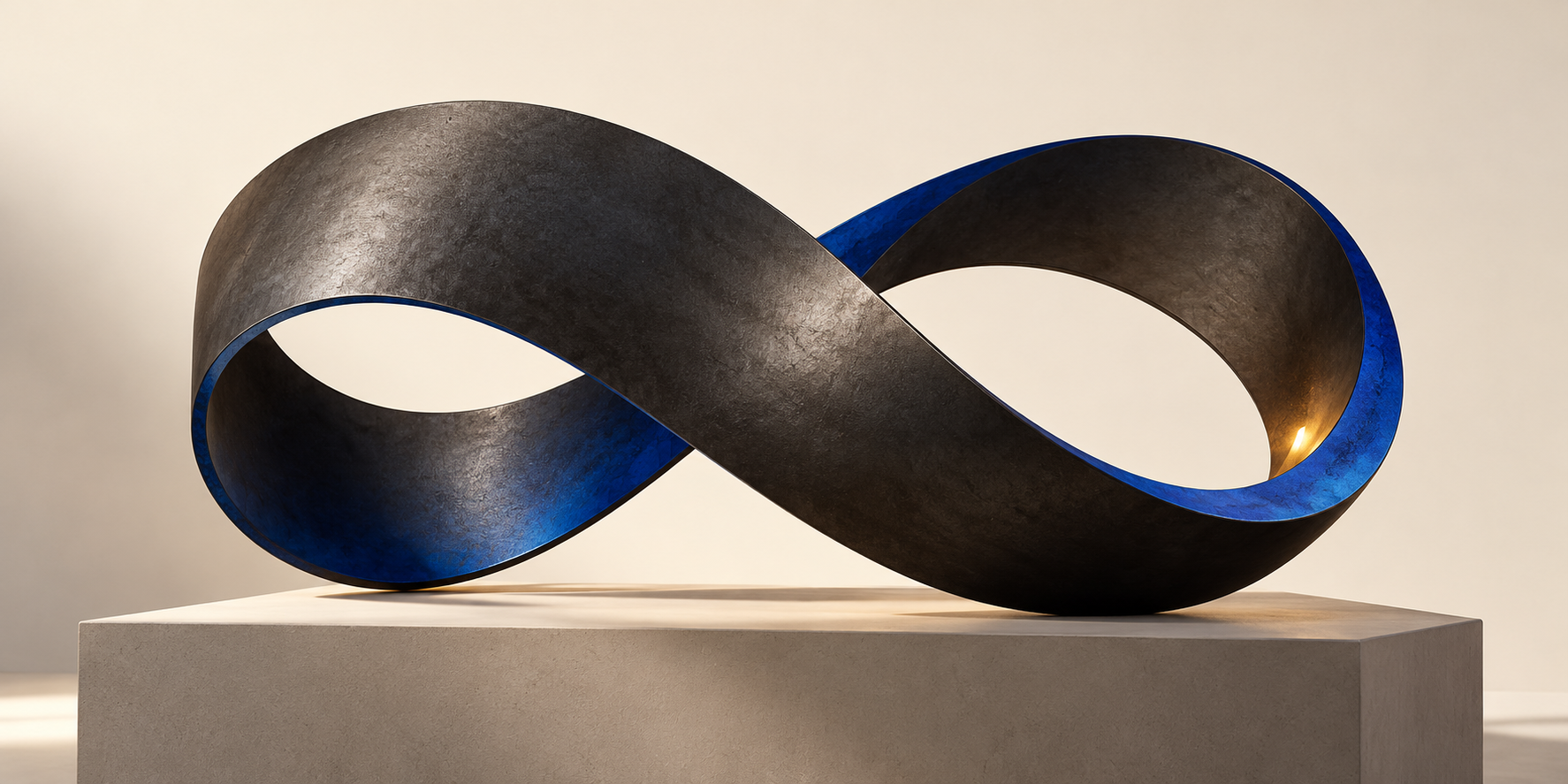
A Möbius strip is made by giving a band a half twist and joining its ends. Follow one side long enough and you return to where you began, having crossed what looked like a boundary. It is a useful object to look at. It is not, by itself, evidence that an argument is wrong.
I use “Möbius trap” as a question for examining explanations that seem to turn every possible response into support for the same conclusion. The trap is not that someone disagrees with me. It is not that an idea is complicated, unfamiliar, or emotionally charged. The question is narrower: does the explanation have a route by which evidence could count against it?
Consider a claim such as, “People who agree with me see the truth; people who disagree are proving how deep the bias runs.” Agreement confirms the claim. Disagreement confirms it too. Unless some possible observation could change the judgment, the explanation has closed its own loop.
That does not prove the claim false. It shows that this version of the claim is difficult to test. A self-protecting explanation may still contain a true idea. The next task is to separate that idea from the circular part and ask what evidence could distinguish it from alternatives.
A small Möbius test has three moves. First, name the tension: what is being claimed, and what observation seems not to fit? Second, locate leverage: what evidence, comparison, or independent check could help tell competing explanations apart? Third, use restraint: hold the verdict open until that check is made.
Try asking: What would count against this explanation? Would I treat the same evidence differently if the people involved had switched sides? Can I state the claim in plain language without building the conclusion into its definition? Is there an independent measure, a time point, or a comparison group that could help?
If every answer is absorbed as confirmation, that is a reason to narrow or suspend the claim—not a license to diagnose the person making it. The test applies to my own explanations first. Otherwise “Möbius trap” can become a new loop: I call an argument circular, and treat that label as proof that I have won.
This distinction matters in ordinary conversations. When a sentence arrives quickly and feels satisfying, pause long enough to write four lines: the claim; the evidence for it; one observation that would count against it; and the next check that could change your mind. If no such check comes to mind, mark the claim as unresolved rather than forcing closure.
The Möbius strip gives us an image of return, not a verdict. The practical value is in finding the point where thought can leave the loop: an observation that might surprise us, a question that risks an answer, or a pause that keeps a conclusion from becoming its own evidence.
A useful inquiry stays revisable. Identify the tension. Locate the leverage. Act where you can. Restrain what you need to. Preserve the remainder.